

A Surprising Instrument That will help you Axial Flow Fan
페이지 정보

본문
3. Propeller odm ac fans vs. Vaneaxial Fans: A Design and Efficiency Showdown
The axial fan oem fan family includes several distinct configurations, with the Propeller fan and the Vaneaxial fan representing two ends of a performance spectrum[13]. The Propeller Fan is the simplest and most common type, consisting of the fan blades and a motor, often mounted on a plate or wall[13]. It is designed for moving extremely large volumes of air against virtually no resistance, making it suitable for general ventilation, exhaust fans, and comfort cooling where air is moved across a free space[14]. Its efficiency drops dramatically if installed in a restrictive duct or against high static pressure[6]. By contrast, the Vaneaxial Fan is a specialized, high-performance variant. It features aerodynamically designed guide vanes, or stator vanes, positioned either before or most commonly, immediately behind the impeller[13]. These stationary vanes are the key differentiator; as the impeller rotates, it introduces a rotational (swirl) component to the airflow, which reduces efficiency[13]. The guide vanes are meticulously shaped and angled to straighten this swirling air before it exits the fan[14]. By recovering the rotational kinetic energy and converting it into useful static pressure, the Vaneaxial design can generate significantly higher pressure than a simple propeller fan without losing the high-flow characteristic of the axial design[13]. This makes Vaneaxial fans the preferred choice for applications requiring high flow rates through long or restrictive ducted systems, such as tunnel ventilation, parking garage exhausts, or complex HVAC variable air volume (VAV) systems[13][14].
 DC Axial Fan
 AC AXIAL Fan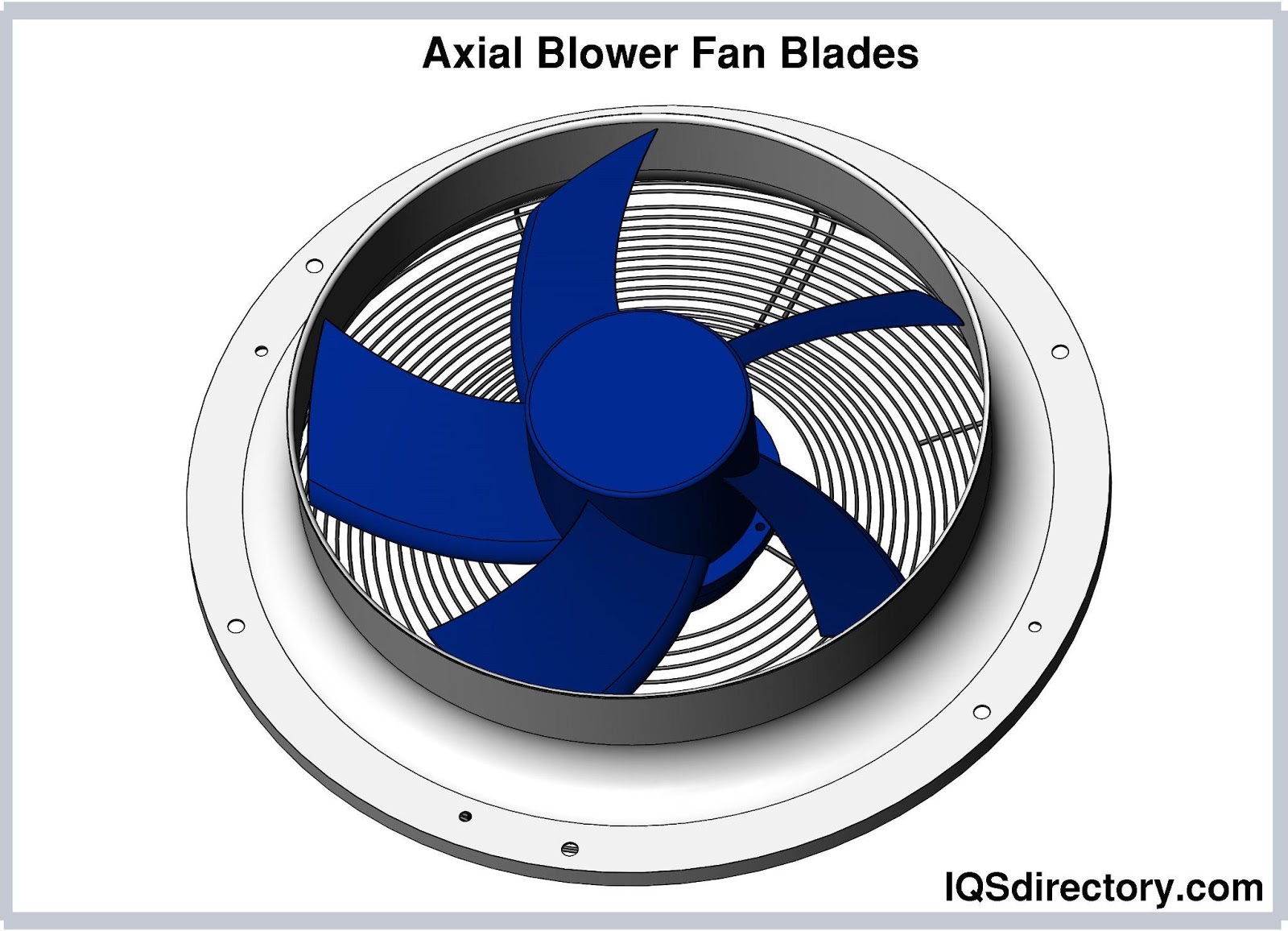
The axial fan oem fan family includes several distinct configurations, with the Propeller fan and the Vaneaxial fan representing two ends of a performance spectrum[13]. The Propeller Fan is the simplest and most common type, consisting of the fan blades and a motor, often mounted on a plate or wall[13]. It is designed for moving extremely large volumes of air against virtually no resistance, making it suitable for general ventilation, exhaust fans, and comfort cooling where air is moved across a free space[14]. Its efficiency drops dramatically if installed in a restrictive duct or against high static pressure[6]. By contrast, the Vaneaxial Fan is a specialized, high-performance variant. It features aerodynamically designed guide vanes, or stator vanes, positioned either before or most commonly, immediately behind the impeller[13]. These stationary vanes are the key differentiator; as the impeller rotates, it introduces a rotational (swirl) component to the airflow, which reduces efficiency[13]. The guide vanes are meticulously shaped and angled to straighten this swirling air before it exits the fan[14]. By recovering the rotational kinetic energy and converting it into useful static pressure, the Vaneaxial design can generate significantly higher pressure than a simple propeller fan without losing the high-flow characteristic of the axial design[13]. This makes Vaneaxial fans the preferred choice for applications requiring high flow rates through long or restrictive ducted systems, such as tunnel ventilation, parking garage exhausts, or complex HVAC variable air volume (VAV) systems[13][14].
DC Axial Fan AC AXIAL Fan- 이전글비아몰 시알리스 부작용 이후 파워이렉트로 바꾼 솔직한 경험 26.03.14
- 다음글남성건강의 과학, 그리고 회복의 기술 – 파워약국이 전하는 현실 조언 26.03.14
댓글목록
등록된 댓글이 없습니다.